


A handful of fresh herbs can bring new life to the ingredients already in your kitchen. Explore simple ways to use basil, parsley, rosemary, thyme, mint, and more.
September 22, 2026
Fresh Herbs: One Ingredient, Many Possibilities

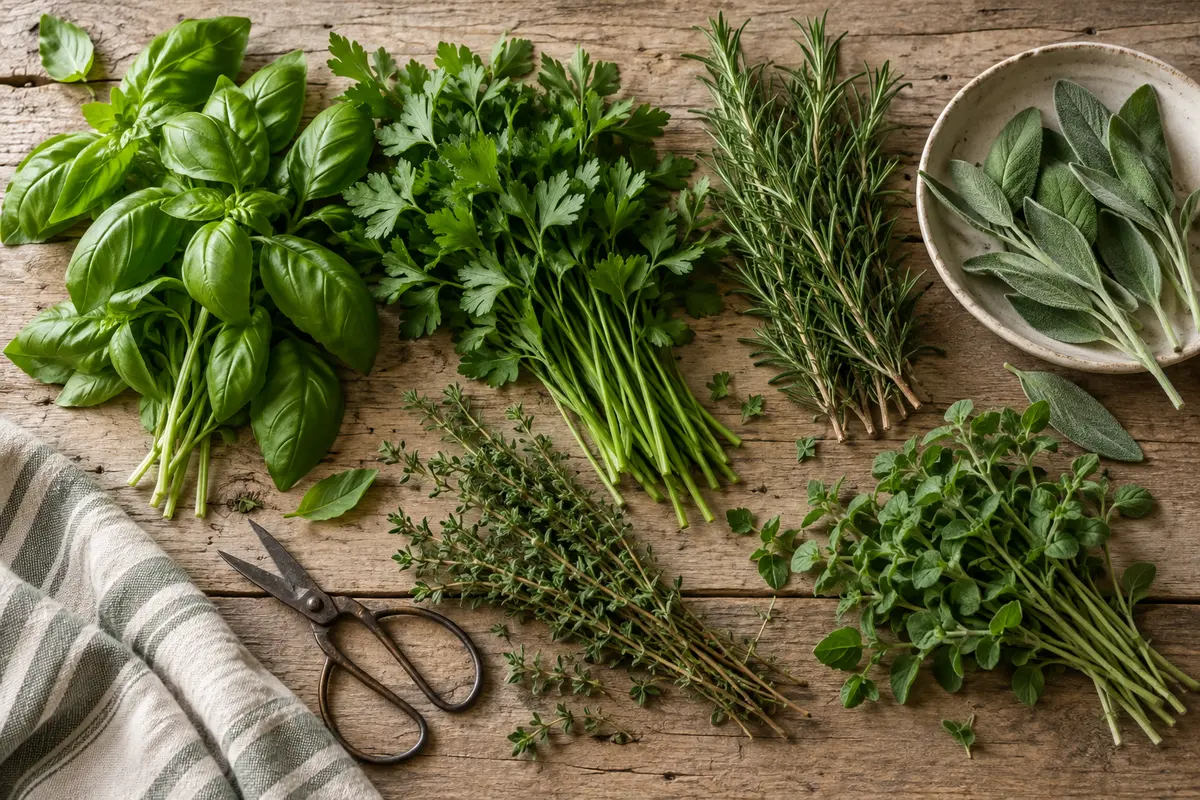
Ingredient of the Month: Fresh Herbs
Part 2 of 2 • June Ingredient of the Month
Part 1 • Fresh Herbs: Garden to Table
Fresh herbs rarely ask us to make an elaborate meal.
A few basil leaves can finish a bowl of pasta. Rosemary can transform a pan of roasted potatoes. Parsley, lemon, and olive oil can become a bright sauce for vegetables, fish, or chicken in only a few minutes.
This is what I love most about herbs. They take the ingredients already waiting in the kitchen and help us see them differently.
A bunch of parsley is not meant for one recipe. It can become a vinaigrette, brighten a soup, flavor a pot of beans, or finish a platter of roasted vegetables. Basil can move from pesto to tomato sauce, salads, sandwiches, and even a bowl of fresh summer fruit.
One ingredient can hold so many possibilities.
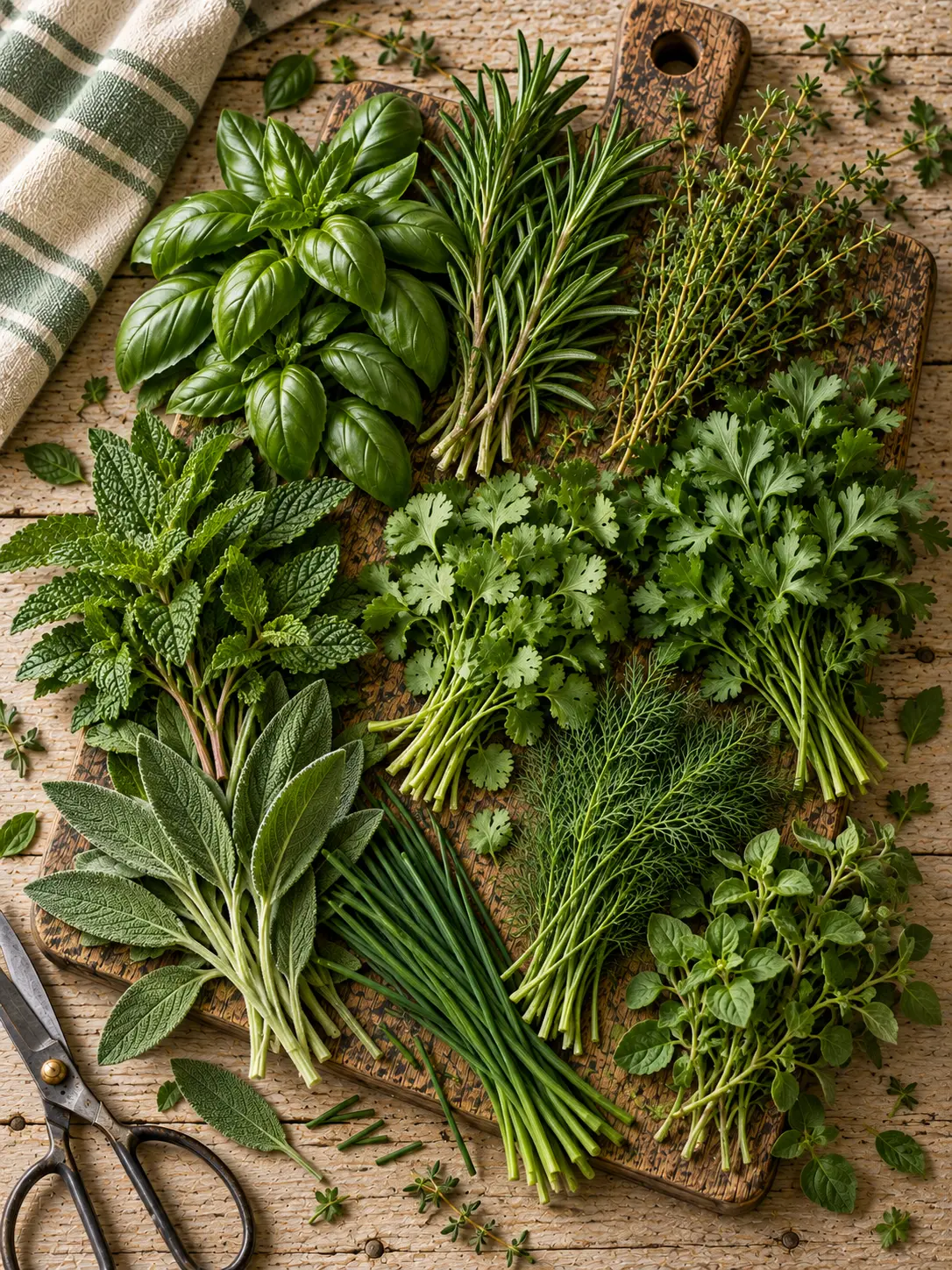
Begin with the Herbs You Already Love
You do not need a large garden or a refrigerator filled with every herb at the grocery store.
Begin with two or three herbs that naturally fit the way you cook.
If you prepare Italian and Mediterranean-inspired meals, start with:
- Basil
- Flat-leaf parsley
- Rosemary
- Thyme
- Oregano
If you enjoy fresh salads and lighter summer dishes, add:
- Mint
- Dill
- Chives
- Cilantro
- Tarragon
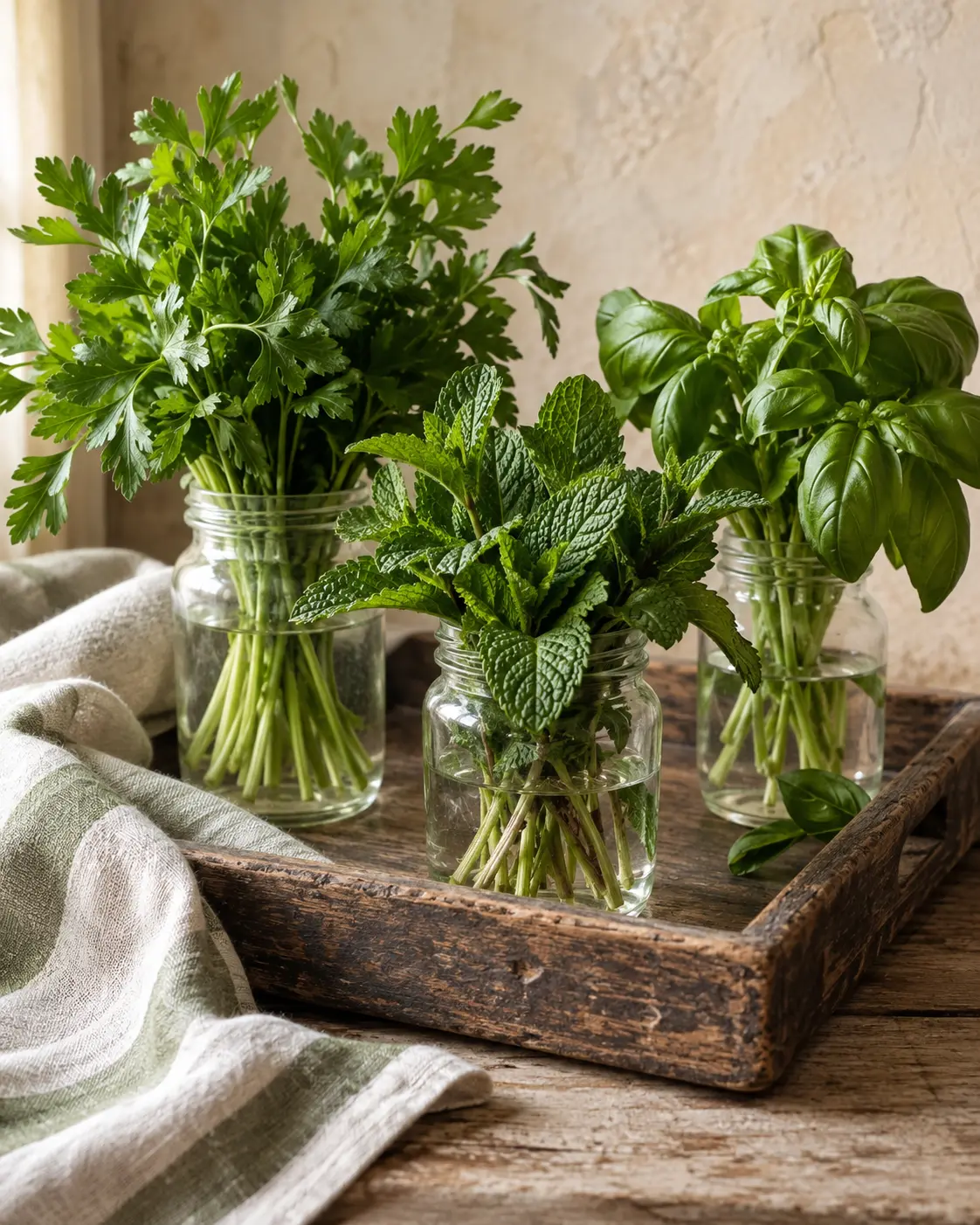
Fresh herbs are easier to use when they are visible. Keep a small jar of cut herbs where you will see it, plant a few favorites near the kitchen, or add an herb pot to a sunny patio.
When herbs become part of the everyday landscape, they become part of the everyday meal.
A Simple Way to Build Flavor with Fresh Herbs
When I want to create something without following a formal recipe, I often begin with four simple elements:
Fresh herbs + good olive oil + something acidic + a little salt
The acid might be fresh lemon juice, red wine vinegar, white wine vinegar, or balsamic vinegar.
From that simple foundation, you can make a dressing, spoonable sauce, marinade, or finishing drizzle. Add garlic, shallot, Dijon mustard, capers, Parmesan, toasted nuts, or red pepper flakes to take it in a new direction.
Fresh herbs give us the freedom to taste as we go.
Start with a small amount. Chop, stir, and taste. Add another handful if the dish needs more freshness.
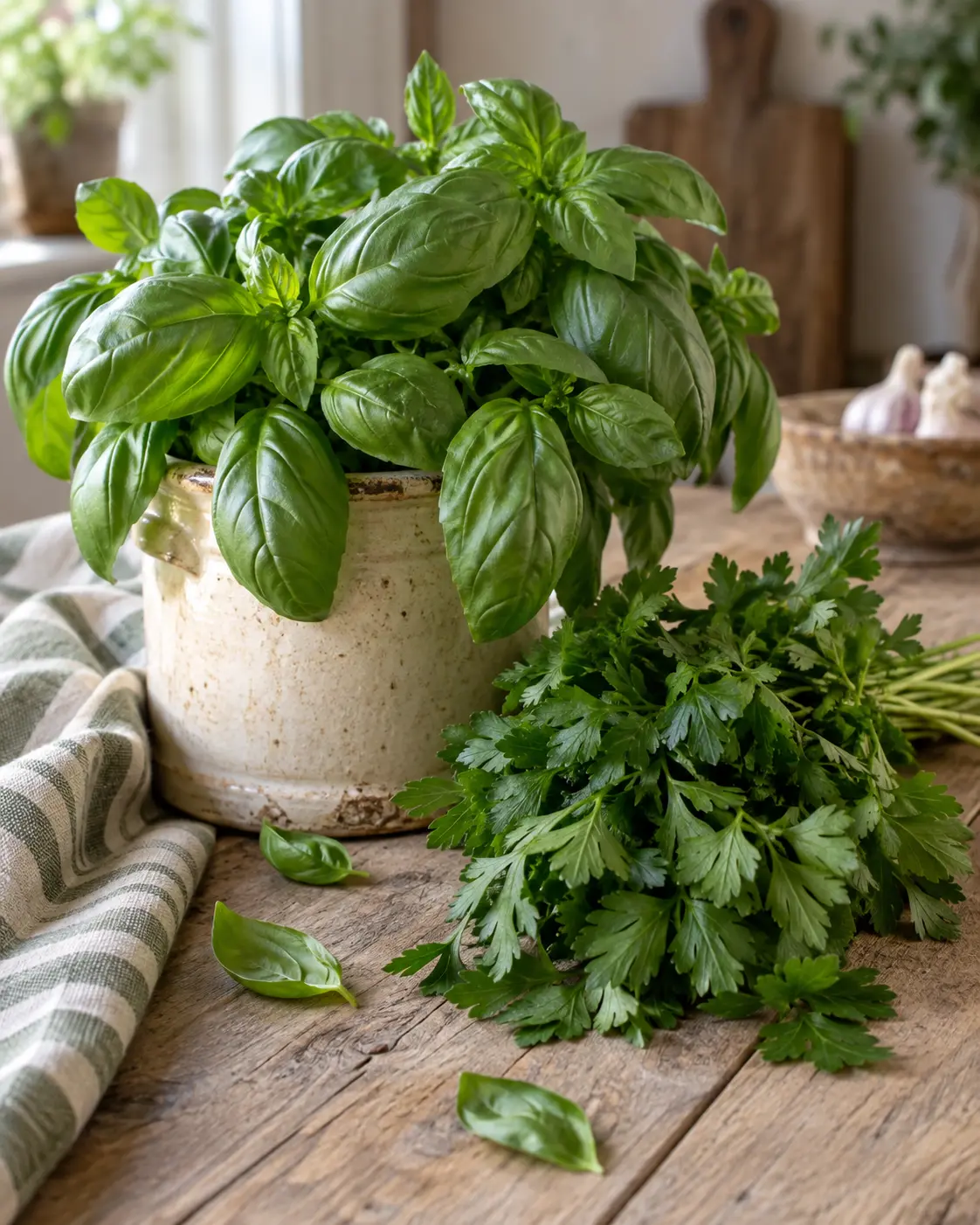
1. Turn Fresh Herbs into Pesto
Pesto is one of the most useful ways to turn a large amount of fresh herbs into something you can enjoy throughout the week.
Traditional basil pesto brings together fresh basil, garlic, pine nuts, Parmesan, olive oil, and salt. It is closely tied to Ligurian cooking and remains one of the simplest expressions of summer basil.
But basil is only the beginning.
Try making pesto with:
- Parsley and walnuts
- Arugula and almonds
- Mint and pistachios
- Cilantro and pepitas
- Kale and basil
- Carrot tops and parsley
- Spinach and basil
Spoon pesto over pasta, vegetables, eggs, beans, grilled chicken, or fish. Swirl it into soup, spread it onto sandwiches, or use it as the base for a simple flatbread.
Freeze extra pesto in small portions so you can bring a little summer flavor to the table later in the year.
2. Make an Herb Vinaigrette
Fresh herb vinaigrette is one of the hardest-working sauces in my kitchen.
Begin with olive oil and vinegar or lemon juice. Add a handful of chopped herbs, a small spoonful of Dijon mustard, salt, and freshly ground pepper.
Basil and parsley create an Italian-inspired vinaigrette for tomatoes and mozzarella. Dill and chives pair beautifully with cucumbers and potatoes. Mint and parsley make a fresh dressing for grains, chickpeas, and roasted vegetables.
Use herb vinaigrette to dress:
- Green salads
- Pasta salad
- White bean salad
- Roasted vegetables
- Grilled zucchini
- Tomato and cucumber salad
- Grain bowls
- Chicken or fish
A jar in the refrigerator can carry several meals through the week without making them feel the same.
3. Blend a Spoonable Herb Sauce
Somewhere between pesto and vinaigrette lives a family of rustic herb sauces.
These sauces do not need perfect measurements. They invite you to use what the garden or refrigerator gives you.
Finely chop parsley, basil, mint, or cilantro. Stir in olive oil, lemon juice or vinegar, garlic, and salt. Add capers, anchovy, red pepper flakes, or finely chopped shallot if they suit the meal.
Spoon the sauce over:
- Grilled meats
- Roasted fish
- White beans
- Lentils
- Crispy potatoes
- Grilled bread
- Eggs
- Roasted cauliflower
- Fresh tomatoes
Italian salsa verde is a beautiful example of how parsley and a few savory pantry ingredients can become a lively sauce for the entire table.
4. Fold Herbs into Butter
Herb butter turns a few tablespoons of chopped herbs into something that feels both rustic and special.
Soften unsalted butter and mix it with herbs, fine sea salt, and any additional flavors you enjoy.
Try these combinations:
- Rosemary, garlic, and lemon zest
- Parsley, chives, and black pepper
- Basil, Parmesan, and red pepper flakes
- Sage and roasted garlic
- Dill, lemon zest, and flaky salt
- Thyme and honey
Shape the butter into a small log, wrap it well, and refrigerate it until firm.
Add a slice to warm bread, roasted vegetables, grilled corn, chicken, fish, pasta, or a baked potato. It is also a lovely way to bring flavor to the table when the rest of the meal is simple.
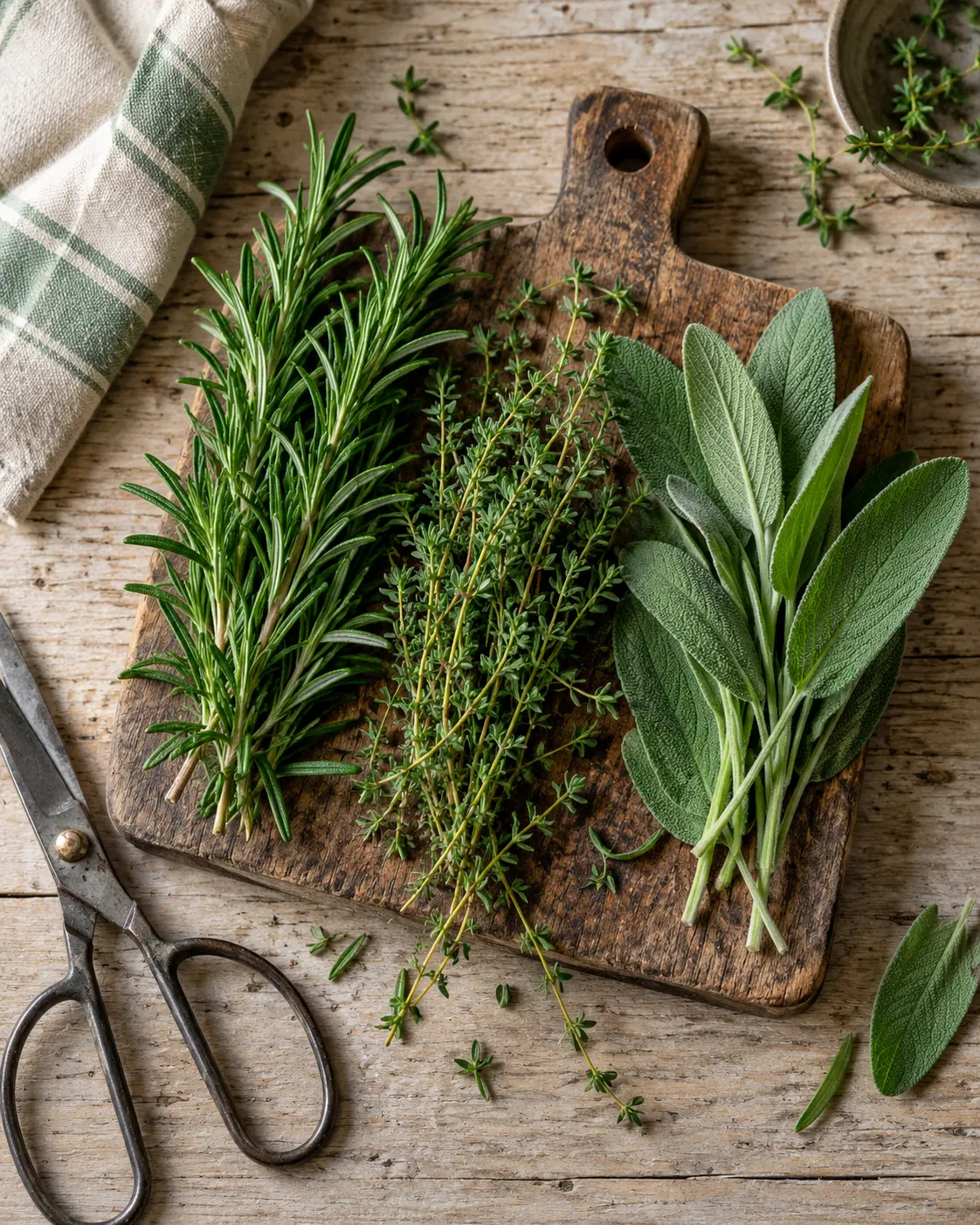
5. Add Herbs to Bread and Dough
Fresh herbs belong beautifully in breads, biscuits, crackers, pizza dough, and savory pastries.
Rosemary pressed into focaccia is a classic place to begin. Thyme adds earthy flavor to biscuits and savory scones. Chives work well in soft rolls, while basil and oregano can be folded into pizza dough or breadsticks.
When adding sturdy herbs to dough, chop them finely so their flavor is distributed throughout.
Tender herbs can also be added to soft cheeses or butter served alongside the finished bread.
A warm loaf, olive oil, and a few herbs can become the beginning of dinner before the main dish even reaches the table.
6. Bring Freshness to Eggs
Eggs provide a simple canvas for fresh herbs.
Fold chopped chives, parsley, basil, dill, or thyme into scrambled eggs, omelets, and frittatas. Add the herbs near the end so their flavor remains fresh.
Try pairing:
- Chives with scrambled eggs
- Basil with tomatoes and mozzarella
- Dill with goat cheese
- Parsley with mushrooms
- Thyme with caramelized onions
- Mint with peas and feta
A garden frittata is also a wonderful place to use small amounts of several herbs. There is no need to have a full bunch of any one variety.
7. Finish Soups, Beans, and Sauces
Fresh herbs can give long-cooked dishes a final layer of life.
Add sturdy herbs such as rosemary and thyme during cooking. Tie whole sprigs together with kitchen twine or add them directly to the pot, then remove the woody stems before serving.
Save tender herbs for the final minutes.
Stir basil into tomato soup, parsley into chicken soup, dill into potato soup, or cilantro into black bean soup. Add chopped rosemary to white beans or finish lentils with parsley and mint.
This combination of long-developed flavor and last-minute freshness creates balance in the bowl.
8. Toss Herbs with Pasta and Grains
Fresh herbs can turn warm pasta, rice, farro, couscous, or barley into a complete side dish.
Begin with a cooked grain or pasta, then add olive oil, lemon juice, salt, and chopped herbs.
Build from there with:
- Roasted vegetables
- Fresh tomatoes
- Chickpeas or white beans
- Feta, Parmesan, or fresh mozzarella
- Toasted nuts
- Olives
- Capers
- Lemon zest
Parsley and basil create a familiar Mediterranean foundation. Mint brings freshness to couscous and grain salads. Dill pairs well with rice, cucumbers, and feta.
These dishes are especially useful for summer gatherings because they can be served warm, at room temperature, or chilled.
9. Pair Herbs with Garden Vegetables
Fresh herbs and seasonal vegetables naturally belong together.
Try these simple pairings:
- Tomatoes: Basil, parsley, oregano, thyme
- Zucchini: Basil, mint, parsley, thyme
- Potatoes: Rosemary, parsley, dill, chives
- Carrots: Thyme, parsley, dill, mint
- Cucumbers: Dill, mint, parsley, chives
- Eggplant: Basil, oregano, parsley, mint
- Peas: Mint, parsley, chives, tarragon
- Green beans: Basil, parsley, dill, thyme
- Mushrooms: Thyme, parsley, rosemary, sage
Let these combinations serve as starting points rather than rules.
A handful of herbs can be tossed with vegetables before roasting, stirred into a finished dish, or blended into a sauce served on the side.
10. Use Herbs in Drinks and Desserts
Fresh herbs do not need to remain on the savory side of the kitchen.
Mint, basil, thyme, rosemary, and lavender can add fragrance to fruit, baked goods, syrups, and summer drinks.
Try:
- Basil with strawberries or peaches
- Mint with watermelon
- Thyme with lemon
- Rosemary with orange
- Lavender with honey
- Mint in iced tea
- Basil in lemonade
- Rosemary in a citrus syrup
Use a light hand. Herbs should lift the flavor without making dessert taste savory.
A few bruised mint leaves in iced tea or a small sprig of rosemary in lemonade can give a familiar drink a seasonal twist.
Create an Everyday Herb Trio
If buying several bunches feels overwhelming, choose three herbs that work together.
The Italian Kitchen Trio
Basil + parsley + oregano
Use them in tomato dishes, pasta, salads, marinades, pizza, and sauces.
The Roasting Trio
Rosemary + thyme + parsley
Use them with potatoes, root vegetables, chicken, beans, soups, and bread.
The Fresh Summer Trio
Mint + dill + parsley
Use them with cucumbers, yogurt, grains, potatoes, peas, lemon, and feta.
The Kitchen Garden Trio
Basil + chives + thyme
Use them with eggs, tomatoes, vegetables, soft cheeses, and savory breads.
Buying herbs with several meals in mind helps reduce waste and makes the grocery purchase feel more useful.
One Bunch of Parsley, Four Possibilities
A bunch of parsley can easily move through several meals.
- Chop some into a vinaigrette for a tomato and cucumber salad.
- Stir a handful into soup or a pot of white beans.
- Blend the remaining leaves into pesto or salsa verde.
- Add the tender stems to stock, sauce, or a marinade.
This approach works with almost every fresh herb.
Before buying a bunch, imagine two or three ways you can use it. One recipe may inspire the purchase, but the rest of the bunch can help shape the meals that follow.
When Fresh Herbs Feel Too Expensive
Fresh herbs can be costly when a recipe uses only a few leaves.
To make them more practical:
- Buy only the varieties you use regularly.
- Choose loose bunches when available.
- Plan several meals around one herb.
- Grow frequently used herbs in containers.
- Preserve extras before they begin to wilt.
- Use tender stems as well as leaves.
- Combine small amounts of several herbs into one sauce.
- Keep dried herbs available when fresh herbs are not practical.
Living herb plants sometimes cost little more than packaged herbs and may continue producing for weeks with proper care.
The goal is not to buy every herb. It is to use the ones you choose fully and thoughtfully.
Fresh Herbs in the MWT Kitchen
Fresh herbs often guide what I cook rather than simply following along with a recipe.
When basil is abundant, I know pesto, tomato salads, pasta, and garden frittatas will find their way to the table. Rosemary usually leads me toward bread, beans, or a pan of roasted potatoes. Parsley becomes the herb I scatter into nearly everything.
This is one of the gifts of growing food. The garden offers an ingredient, and the kitchen responds.
I enjoy recipes that leave room for that exchange. A vinaigrette can use basil one week and parsley the next. A loaf can hold rosemary, thyme, or a mixture of both. A bowl of pasta can change with whatever is growing outside the kitchen door.
The meal remains simple, but it never feels exactly the same.
Frequently Asked Questions
Which fresh herb is the most versatile?
Flat-leaf parsley is one of the most versatile. It works in sauces, dressings, soups, pasta, beans, vegetables, eggs, and marinades without overwhelming the dish.
Can I mix several fresh herbs together?
Absolutely. Choose herbs with compatible flavors and begin with small amounts. Parsley blends well with nearly everything and makes a helpful foundation for an herb mixture.
When should I add fresh herbs while cooking?
Add delicate herbs such as basil, parsley, dill, cilantro, chives, and mint near the end of cooking. Sturdier herbs such as rosemary, oregano, and thyme can cook longer.
How much dried herb should replace fresh?
A helpful starting point is one teaspoon of dried herbs for every tablespoon of fresh herbs. Taste and adjust because dried herbs vary in strength.
What can I do with herbs that are beginning to wilt?
Remove any spoiled leaves, then turn the remaining herbs into pesto, vinaigrette, herb butter, sauce, or freezer cubes. Use them promptly while their flavor is still good.
My Ingredient Philosophy
Fresh herbs teach us to cook with attention.
They ask us to notice what is growing, what needs to be used, and what a dish may need before it reaches the table. Sometimes the answer is rosemary simmered slowly in a pot. Sometimes it is basil torn over tomatoes at the very last moment.
I choose organic herbs whenever possible and grow many of the varieties I use most. Still, the heart of this way of cooking is not found in having a perfect garden.
It is found in caring for simple ingredients and using them well.
Around My Table
A handful of fresh herbs can finish several dishes on the same table.
Use what you have growing or pick up one good bunch at the store. There’s no need to buy several herbs for a simple supper.
Place a bowl of pasta on the table with torn basil. Set warm bread beside rosemary butter. Scatter parsley over a platter of roasted vegetables and pass it around.
Let everyone help themselves, and keep a few extra herbs nearby for anyone who wants another sprinkle.


