This homemade hummus blends chickpeas, tahini, fresh lemon, and olive oil into a creamy dip in about 10 minutes. A little cumin adds warmth, and garlic powder gives it a mellow garlic flavor without chopping a clove.
I like having a recipe that starts with a can of chickpeas and needs very little else. The food processor does most of the work, leaving you to taste and decide whether it needs another squeeze of lemon or a little more tahini.
Save some chickpea liquid before draining the can. It helps loosen the hummus as it blends, so you can make it thick enough to spread or soft enough to scoop with bread.
Why You’ll Love This
A few pantry staples and a fresh lemon make a useful addition to lunch or a shared snack.
Quick to prepare. Canned chickpeas keep the prep to about 10 minutes.
No cooking needed. Add the ingredients to a food processor and blend.
Easy to adjust. Taste as you go to get the lemon, salt, and sesame flavor you enjoy.
More than a dip. Use it in sandwiches, wraps, and grain bowls.
Ingredients You’ll Need
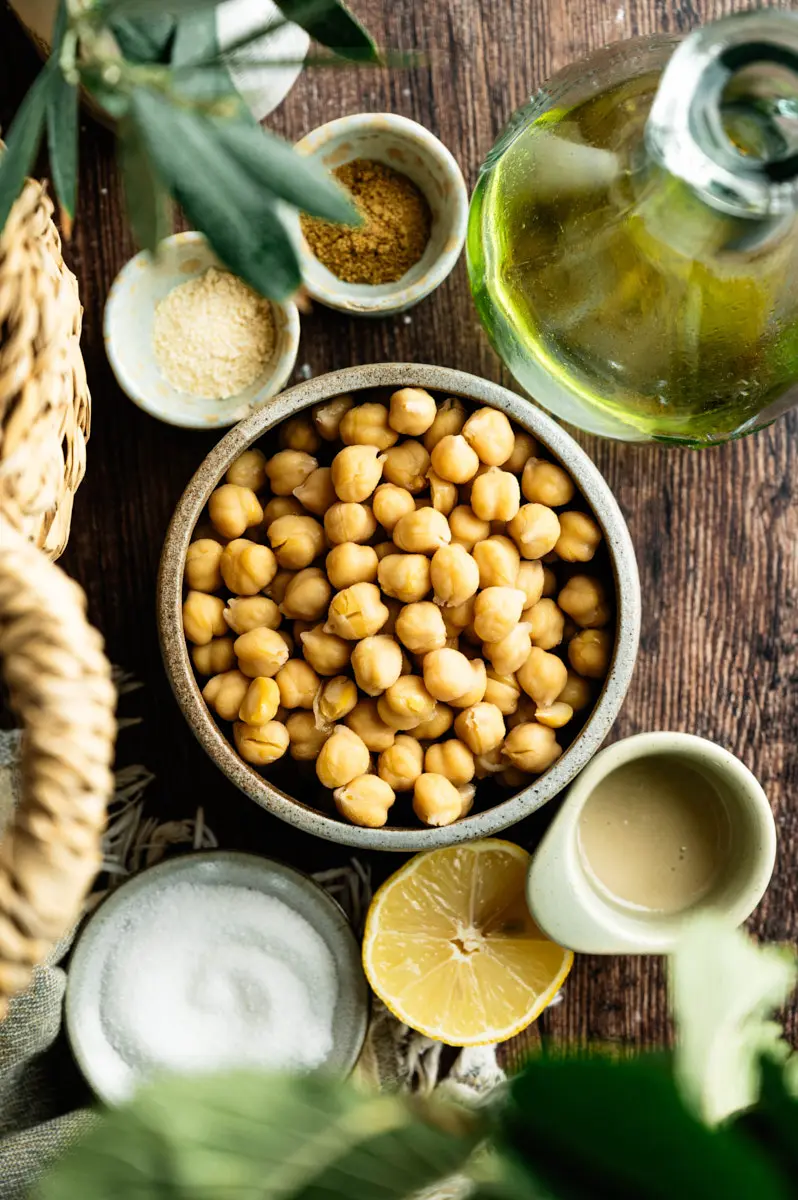
Chickpeas
Use one 15-ounce can of chickpeas, drained and rinsed, which gives you about 240 g of drained chickpeas. Before draining the can, reserve some of the chickpea liquid, also called aquafaba.
The reserved liquid is useful for adjusting consistency. Keep it nearby while you blend.
Tahini
Tahini gives hummus its earthy, nutty flavor and creamy body. Stir the jar well before measuring because the natural sesame oils can separate.
Begin with one rounded tablespoon, or about 15 g. Add a little more after blending if you prefer a deeper sesame flavor.
Fresh Lemon Juice
Measure 2 tablespoons of fresh lemon juice rather than relying on half a lemon. The amount of juice varies from fruit to fruit.
Extra-Virgin Olive Oil
Use 2 tablespoons (30 ml) of smooth, fruity extra-virgin olive oil in the hummus. Save a little extra for drizzling over the bowl.
Ground Cumin
¼ teaspoon of ground cumin adds earthy warmth. Use a fresh-smelling spice for the fullest flavor.
Garlic Powder
⅛ teaspoon of garlic powder gives even, mellow flavor and blends in easily.
Fine Sea Salt
Begin with ⅛ teaspoon of fine sea salt. Check the seasoning after blending, especially if the chickpeas or their liquid are salted.
Ingredient Philosophy
I choose organic chickpeas, tahini, and lemons whenever possible. Canned chickpeas make this a practical everyday recipe, and a tahini you enjoy is worth keeping on hand. Stir it thoroughly so you measure the sesame paste and oil together.
This is how I like to use a well-stocked pantry: a few ingredients that work in several meals, with something fresh to bring them together. Lemon gives this hummus its brightness, so I squeeze it just before blending.
How to Make Homemade Hummus
Reserve the Chickpea Liquid
Before draining the chickpeas, pour some of the liquid into a small cup or bowl. You will need 2 to 4 tablespoons, depending on the chickpeas and your preferred texture.
Drain and rinse the chickpeas well. There is no need to peel them for this everyday version.
Add the Ingredients
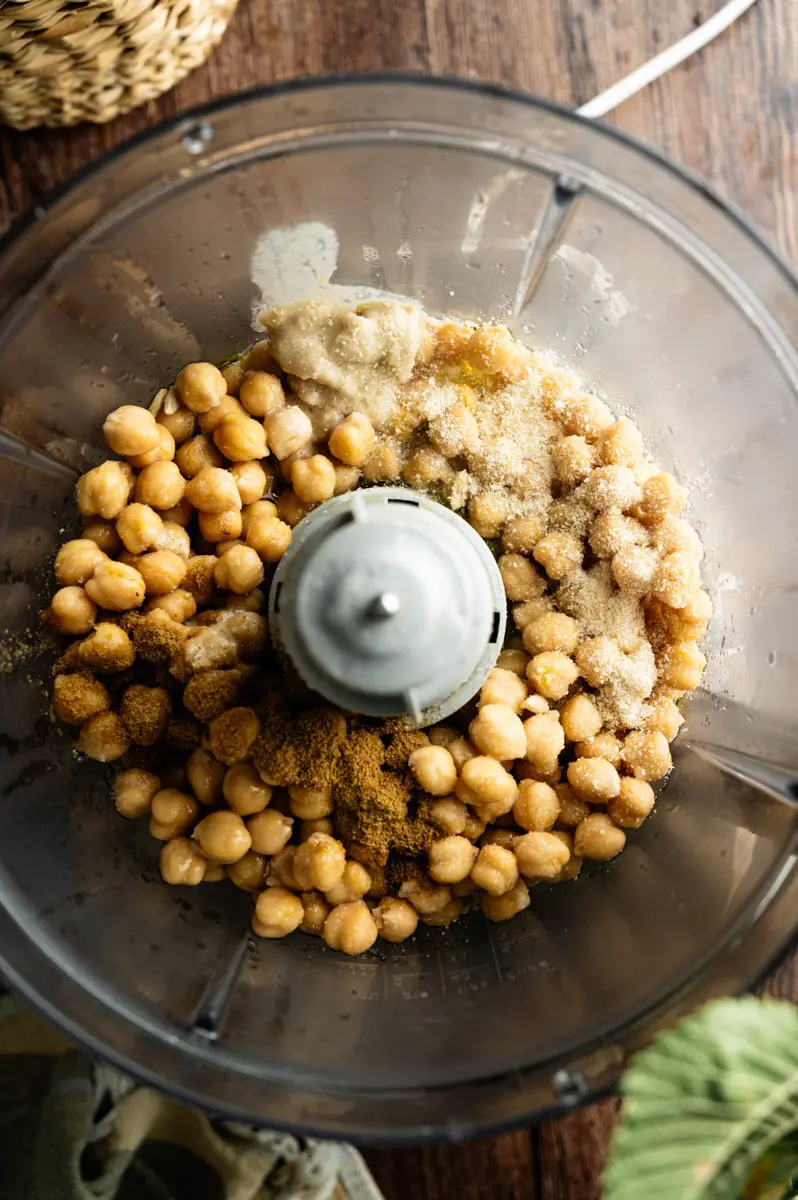
Place the drained chickpeas, tahini, olive oil, lemon juice, sea salt, garlic powder, cumin, and 2 tablespoons of reserved chickpea liquid in a food processor.
Blend Until Smooth
Process until the ingredients begin to look smooth. Stop and scrape down the sides of the bowl as needed so every chickpea reaches the blade.
Adjust the Texture
With the food processor running, add more reserved chickpea liquid 1 tablespoon at a time. Stop when the hummus looks creamy and is easy to spoon.
The exact amount will vary. Some chickpeas are drier than others, and the hummus will thicken slightly after refrigeration.
Give It One More Minute
Once the hummus reaches the right consistency, continue blending for about 1 full minute. This extra time helps the mixture become lighter and smoother.
Taste and Finish
Taste the hummus and adjust the lemon, tahini, cumin, or salt as desired.
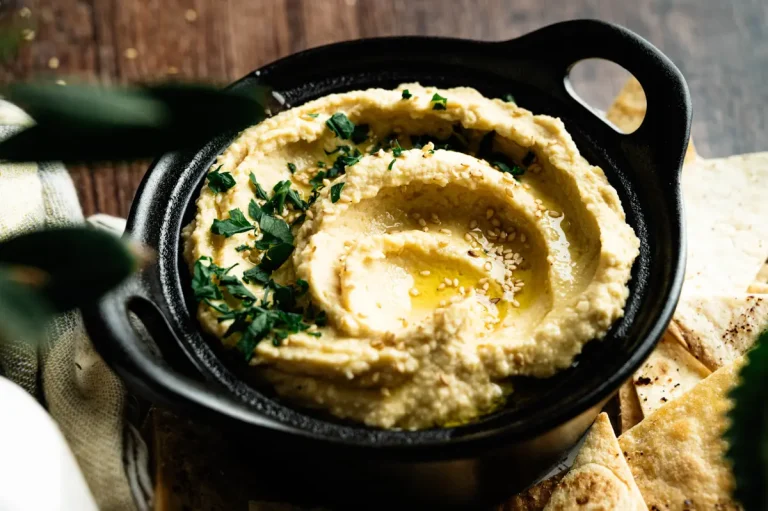
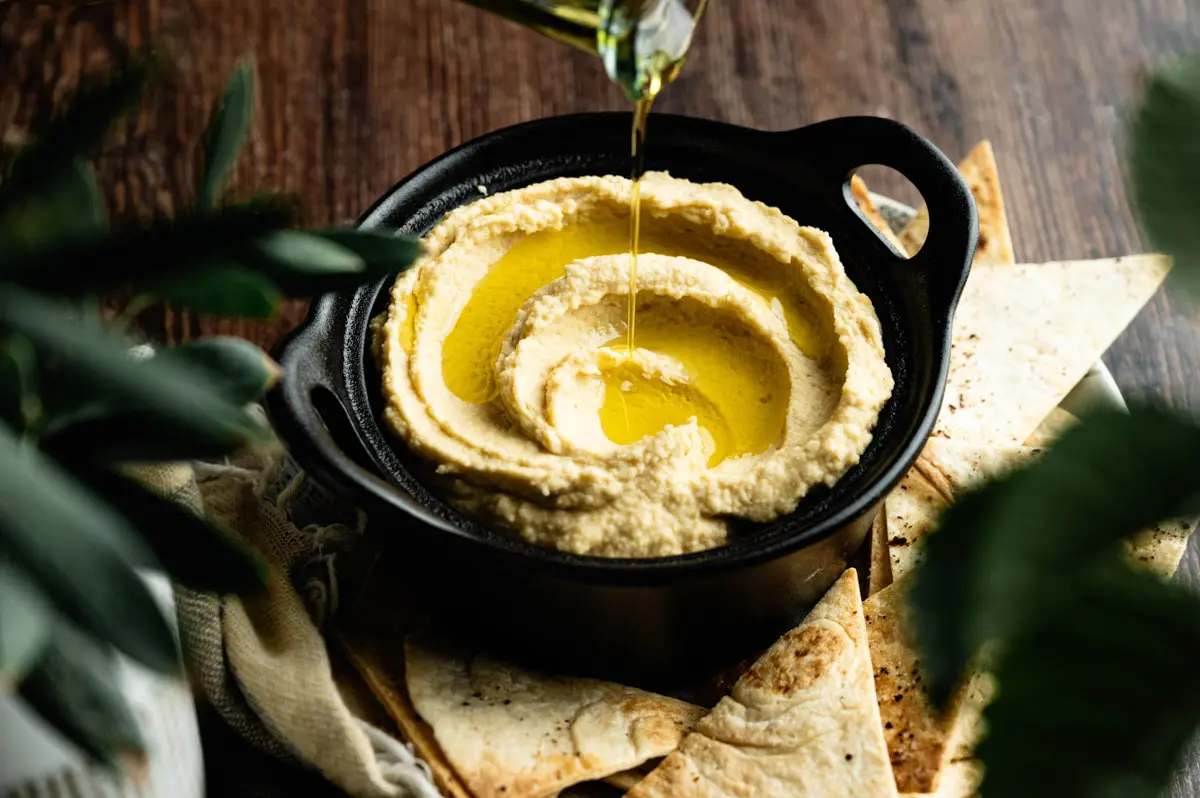
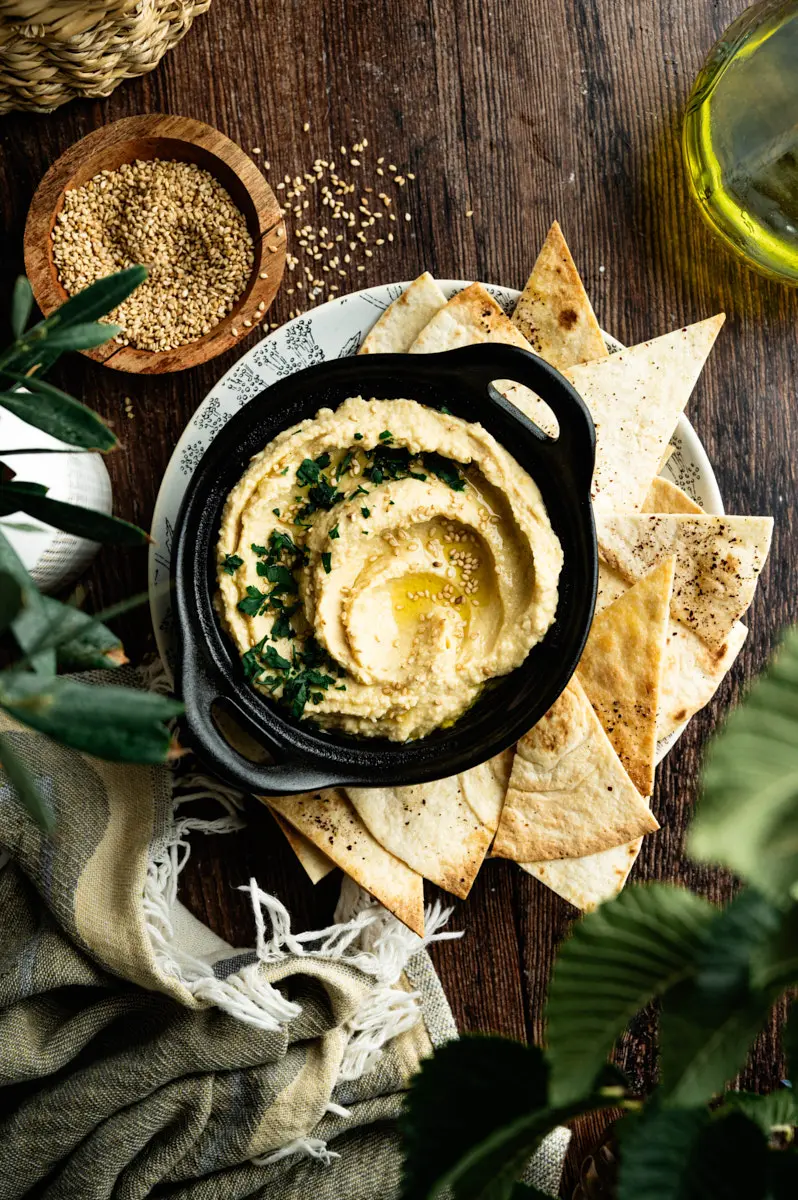
Spoon it into a shallow bowl. Use the back of a spoon to make a few generous swirls, then finish with olive oil and your favorite garnish.
My Weathered Table Tips
Gather everything first. A little mise en place makes this homemade hummus easier to prepare. Measure the tahini, olive oil, lemon juice, and seasonings, and set out the food processor and a small bowl for the chickpea liquid.
Give it the final minute. Once the texture looks right, keep blending as directed. That extra time helps break down the remaining chickpea pieces.
Scrape the bowl. Stop the processor and bring any paste from the sides back toward the blade so it all blends evenly.
Add liquid gradually. Let each spoonful blend in before adding another. It’s easier to loosen thick hummus than to correct a runny batch.
Adjust one thing at a time. Add a little lemon, tahini, cumin, or salt, then blend and taste again before making another change.
A creamy homemade hummus made with chickpeas, tahini, lemon, olive oil, cumin, and a splash of reserved chickpea liquid
Total Time:10 minutes
Yield:about 1¼ cups
Ingredients
115-ounce can chickpeas, drained and rinsed, with liquid reserved (metric weight is approximate)
1 rounded tablespoon tahini
2 tablespoons extra-virgin olive oil
2 tablespoons fresh lemon juice | from about ½ medium lemon
⅛ teaspoon fine sea salt, plus more to taste
⅛ teaspoon garlic powder
¼ teaspoon ground cumin, plus more to taste
2 to 4 tablespoons reserved chickpea liquid, as needed
Optional for serving: extra-virgin olive oil, cumin, paprika, sesame seeds, or chopped parsley
Instructions
Add the drained chickpeas, tahini, olive oil, lemon juice, sea salt, garlic powder, cumin, and 2 tablespoons of reserved chickpea liquid to a food processor.
Blend until the mixture begins to look smooth, stopping to scrape down the sides of the bowl as needed.
With the processor running, add more reserved chickpea liquid, 1 tablespoon at a time, until the hummus is creamy and easy to spoon.
Continue blending for about 1 minute to make the texture lighter and smoother.
Taste and adjust the lemon, tahini, cumin, or salt as desired.
Spoon the hummus into a shallow bowl. Finish with a drizzle of olive oil and your favorite garnish, then serve.
Notes
For the creamiest texture, blend longer than you think you need to. The final minute makes a noticeable difference.
Reserve the chickpea liquid before draining the can. It is much easier to add another spoonful than to replace it after it is gone.
Add the liquid gradually. The hummus can move from thick to loose quickly.
The exact amount of liquid will depend on the chickpeas and the consistency you prefer.
Taste at the end. Add lemon for brightness, tahini for richness, cumin for warmth, or salt to sharpen the flavors.
Storage, Freezing & Make Ahead
Transfer the hummus to a clean, airtight container and refrigerate promptly. It will keep well for up to 4 days.
Hummus thickens as it chills. Stir in a little water before serving if it needs loosening.
For longer storage, freeze the hummus in a freezer-safe container for up to 3 months. Leave a little room for expansion.
Thaw overnight in the refrigerator and stir well. The texture may be less silky after freezing; taste before adding any extra lemon or olive oil.
Author:Lisa Marie Cimini
Prep Time:10 minutes
Cook Time:0 minutes
Category:Appetizer
Method:Food Processor
Cuisine:Mediterranean
Diet:Vegan
From Kitchen to Table
Spread the hummus in a shallow bowl and draw a few swirls with the back of a spoon. Drizzle olive oil into the grooves, then add cumin, paprika, or chopped herbs. Set out warm pita and crisp cucumbers, carrots, radishes, or sweet peppers for scooping.
For lunch, spread it inside a wrap before adding vegetables and greens, or spoon it beneath roasted vegetables in a grain bowl. Thin a small portion with lemon juice and water if you want a dressing.
Fresh Garlic. Replace the garlic powder with a small fresh clove for a sharper flavor. Start with half if it’s strong.
Roasted Garlic. Blend in one or two soft roasted cloves for a sweeter, mellower variation.
Lemon and Herbs. Pulse in chopped parsley, basil, or cilantro after blending the hummus smooth.
Spiced Hummus. Finish with smoked paprika, za’atar, sumac, or extra cumin. Start with a light sprinkle.
Extra Tahini. Add a small spoonful for more sesame flavor, adjusting the lemon and chickpea liquid as needed.
Frequently Asked Questions
Do I Need to Peel Chickpeas for Hummus?
No. Peeling can give a silkier result, but this recipe leaves the skins on. Scraping the bowl and blending thoroughly help smooth the texture.
What Is Aquafaba?
Aquafaba is the liquid in a can of chickpeas. In this recipe, it loosens the hummus and helps create a lighter texture without adding more oil.
Why Is My Hummus Too Thick?
Chickpeas vary in moisture. Add reserved chickpea liquid or water 1 tablespoon at a time while the processor runs until the hummus is creamy and easy to spoon.
Why Is My Hummus Too Thin?
It may have more liquid than the chickpeas need. Chill it first, since hummus firms in the refrigerator. If it’s still too loose, blend in more chickpeas or a little tahini and adjust the seasoning.
Can I Make Hummus Without Tahini?
You can leave it out, but the flavor and texture will be different. Add a little extra olive oil and chickpea liquid as needed, then adjust the lemon and salt.
Can I Use Dried Chickpeas?
Yes, but cook them until very tender before making the hummus. You will need about 240 g of cooked chickpeas for this recipe.
Around My Table
I like a bowl that people can help themselves to while the rest of lunch comes together. Hummus is easy to set out with whatever vegetables are in the refrigerator, and it gives everyone something to nibble on without much last-minute work.
Put the bread within reach and keep a spoon in the bowl for anyone building a plate. A few things to pass around are often all the table needs.
You’ll find more dips, simple lunches, and meals to share in my Recipe Box, with everyday ingredient ideas in Pantry Foundations.
2 responses to “Homemade Hummus”
Julia
This is the tastiest hummus ever!
Love this recipe!
Thank you, Julia! I’m so happy you loved the hummus. It’s one of those simple recipes I always want tucked into the refrigerator for an easy lunch or afternoon snack. Thank you for taking the time to leave such a lovely review! 💜




Leave a Reply